2008 · Devices & clinical
Decompressive Craniectomy
Schirmer CM, Ackil AA, Malek AM.
Neurocrit Care 8(3):456-70, 2008.
PMID 18392785 · DOI 10.1007/s12028-008-9082-y
In plain language
Decompressive craniectomy is surgery that removes part of the skull to relieve high pressure inside the head when standard treatments fail. It has mainly been used for traumatic brain injury, large strokes in the territory of the middle cerebral artery, and bleeding around the brain from a burst aneurysm.
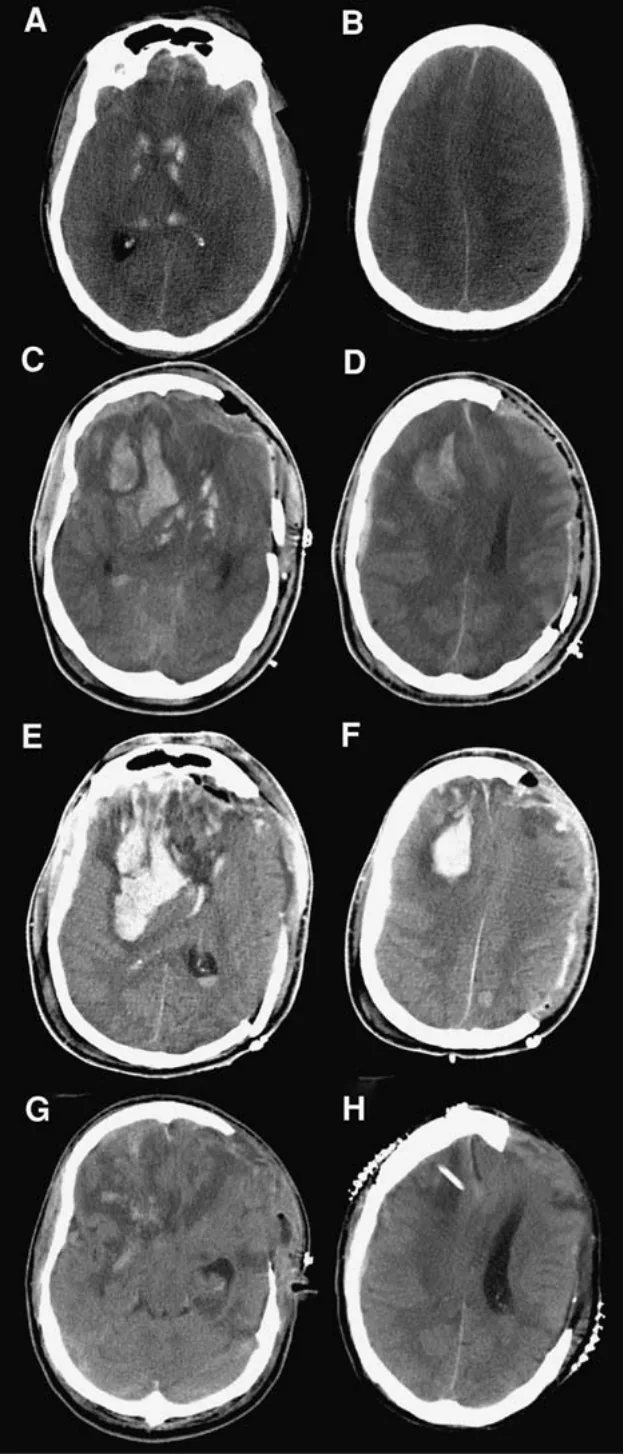
This review examines the published evidence for each of these conditions, including questions about timing and which side to operate on. The authors conclude that the data were not yet sufficient to support routine use. Some evidence suggests that early, aggressive use in patients in better condition may improve outcome, but this remains debated.
They advise that the decision be individualized and discussed thoroughly with caregivers.
A plain-language summary for patients and families. It is not medical advice, and individual results vary.
Abstract
Decompressive Craniectomy (DC) is used to treat elevated intracranial pressure that is unresponsive to conventional treatment modalities. The underlying cause of intracranial hypertension may vary and consequently there is a broad range of literature on the uses of this procedure. Traumatic brain injury (TBI), middle cerebral artery (MCA) infarction, and aneurysmal subarachnoid hemorrhage (SAH) are three conditions for which DC has been predominantly used in the past. Despite an increasing number of reports supportive of DC, the controversy over the suitability of the procedure and criteria for patient selection remains unresolved. Although the majority of published studies is retrospective, the recent publication of several randomized prospective studies prompts a reevaluation of the utility of DC. We review the literature concerning the use of DC in TBI, MCA infarction, and SAH and address the evidence regarding common questions pertaining to the timing of and laterality of the procedure. We conclude that at the time of this review, there still remains insufficient data to support the routine use of DC in TBI, stroke or SAH. There is evidence that early and aggressive use of DC in good-grade patients may improve outcome, but the notion that DC is indicated in these patients is contentious. At this point, the indication for DC should be individualized and its potential implications on long-term outcomes should be comprehensively discussed with the caregivers.
Abstract as indexed in PubMed (PMID 18392785). Copyright the publisher.
Cite this paper
Schirmer CM, Ackil AA, Malek AM. Decompressive Craniectomy. Neurocrit Care 8(3):456-70. 2008. doi:10.1007/s12028-008-9082-y PMID: 18392785.