2022 · Devices & clinical
First-in-human endovascular treatment of hydrocephalus with a miniature biomimetic transdural shunt
Lylyk P, Lylyk I, Bleise C, Scrivano E, Lylyk PN, Beneduce B, Heilman CB, Malek AM.
J Neurointerv Surg 14(5):495-9, 2022.
PMID 34862267 · DOI 10.1136/neurintsurg-2021-018136 · PMCID PMC9016261
In plain language
Hydrocephalus is a buildup of cerebrospinal fluid (CSF), the fluid that bathes the brain. It is usually treated with a surgically placed tube that drains fluid into the belly, but these shunts often become infected or need repair.
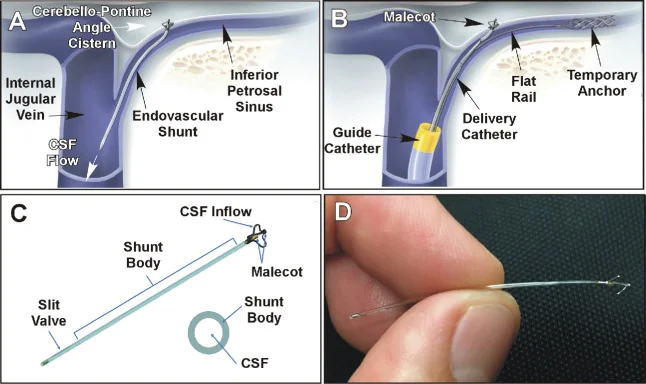
This report describes a new, tiny shunt placed through a vein from the groin, without open surgery. It crosses the tough brain covering (the dura) and lets CSF drain into a large vein, copying the natural drainage structures called arachnoid granulations. In the first human patient, a person in their eighties with severe hydrocephalus after brain bleeding, pressure in the head fell from 38 to below 20 cmH2O within 90 minutes, and the enlarged fluid spaces of the brain returned to normal.
This first-in-human result opens a new, less invasive path to treating hydrocephalus.
A plain-language summary for patients and families. It is not medical advice, and individual results vary.
Abstract
Surgical ventriculoperitoneal shunting remains standard treatment for communicating hydrocephalus, despite persistently elevated infection and revision rates. A novel minimally invasive endovascular cerebrospinal fluid (CSF) shunt was developed to mimic the function of the arachnoid granulation which passively filters CSF from the central nervous system back into the intracranial venous sinus network. The endovascular shunt is deployed via a femoral transvenous approach across the dura mater into the cerebellopontine angle cistern. An octogenarian with intractable hydrocephalus following subarachnoid hemorrhage underwent successful endovascular shunting, resulting in swift intracranial pressure reduction from 38 to <20 cmH2O (<90 min) and resolution of ventriculomegaly. This first successful development of a percutaneous transluminal venous access to the central nervous system offers a new pathway for non-invasive treatment of hydrocephalus and the potential for intervention against neurological disorders.
Abstract as indexed in PubMed (PMID 34862267). Copyright the publisher.
Cite this paper
Lylyk P, Lylyk I, Bleise C, Scrivano E, Lylyk PN, Beneduce B, Heilman CB, Malek AM. First-in-human endovascular treatment of hydrocephalus with a miniature biomimetic transdural shunt. J Neurointerv Surg 14(5):495-9. 2022. doi:10.1136/neurintsurg-2021-018136 PMID: 34862267.