1999 · Mechanobiology · Landmark paper
Hemodynamic shear stress and its role in atherosclerosis
Malek AM, Alper SL, Izumo S.
JAMA 282(21):2035-42, 1999.
PMID 10591386 · DOI 10.1001/jama.282.21.2035
In plain language
Atherosclerosis, the buildup of plaque in arteries, is the leading cause of death in the developed world. Although risk factors such as high blood pressure, smoking, high cholesterol and diabetes affect the whole body, the disease tends to strike specific spots, especially the outer walls where arteries branch.
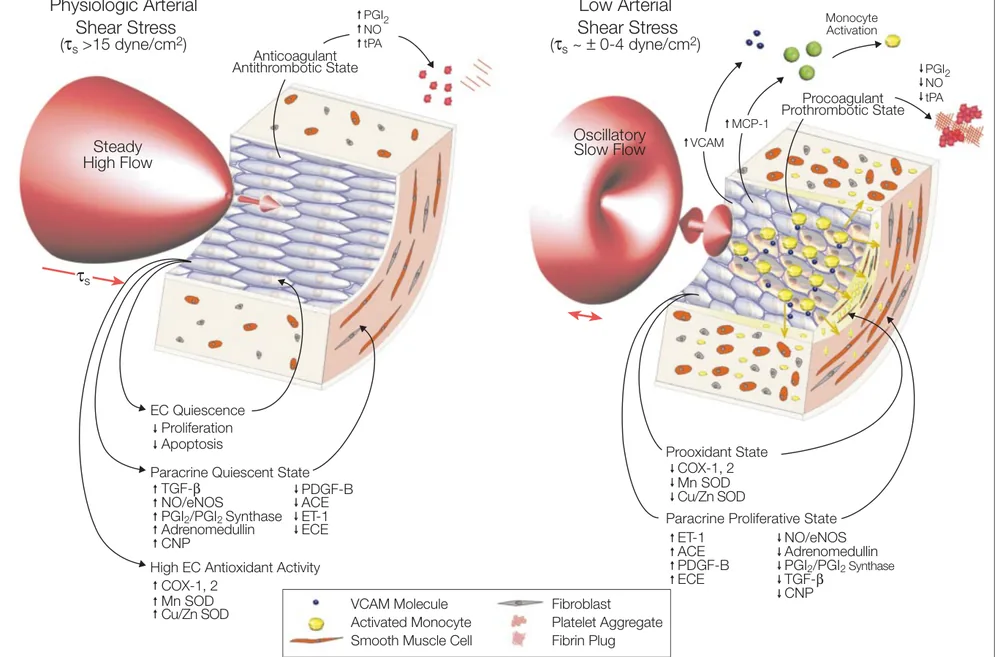
This article explains that in these vulnerable spots, shear stress, the rubbing force of flowing blood on the endothelial cells that line vessels, is weaker. Normal arterial levels of this force (above 15 dyne/cm2) keep the cells quiet and switch on protective genes, while low levels (below 4 dyne/cm2), common at plaque-prone sites, push them toward a plaque-promoting state.
This idea helps explain why a body-wide disease appears in particular places, and it may help guide future treatments.
A plain-language summary for patients and families. It is not medical advice, and individual results vary.
Abstract
Atherosclerosis, the leading cause of death in the developed world and nearly the leading cause in the developing world, is associated with systemic risk factors including hypertension, smoking, hyperlipidemia, and diabetes mellitus, among others. Nonetheless, atherosclerosis remains a geometrically focal disease, preferentially affecting the outer edges of vessel bifurcations. In these predisposed areas, hemodynamic shear stress, the frictional force acting on the endothelial cell surface as a result of blood flow, is weaker than in protected regions. Studies have identified hemodynamic shear stress as an important determinant of endothelial function and phenotype. Arterial-level shear stress (>15 dyne/cm2) induces endothelial quiescence and an atheroprotective gene expression profile, while low shear stress (<4 dyne/cm2), which is prevalent at atherosclerosis-prone sites, stimulates an atherogenic phenotype. The functional regulation of the endothelium by local hemodynamic shear stress provides a model for understanding the focal propensity of atherosclerosis in the setting of systemic factors and may help guide future therapeutic strategies.
Abstract as indexed in PubMed (PMID 10591386). Copyright the publisher.
Cite this paper
Malek AM, Alper SL, Izumo S. Hemodynamic shear stress and its role in atherosclerosis. JAMA 282(21):2035-42. 1999. doi:10.1001/jama.282.21.2035 PMID: 10591386.