1999 · Devices & clinical
Embolization of non-ruptured aneurysms
Dowd CF, Phatouros CC, Malek AM, Lempert TE, Meyers PM, Halbach VV, Higashida RT.
Interv Neuroradiol 5 Suppl 1:93-6, 1999.
PMID 20670547 · DOI 10.1177/15910199990050S117
In plain language
Brain aneurysms can be treated from inside the blood vessel with the Guglielmi Detachable Coil (GDC), a system introduced eight years before this report. The authors reviewed 435 aneurysms treated this way at UCSF: 55% were in the front part of the brain's circulation and 45% in the back, and 55% had bled while 45% had not.
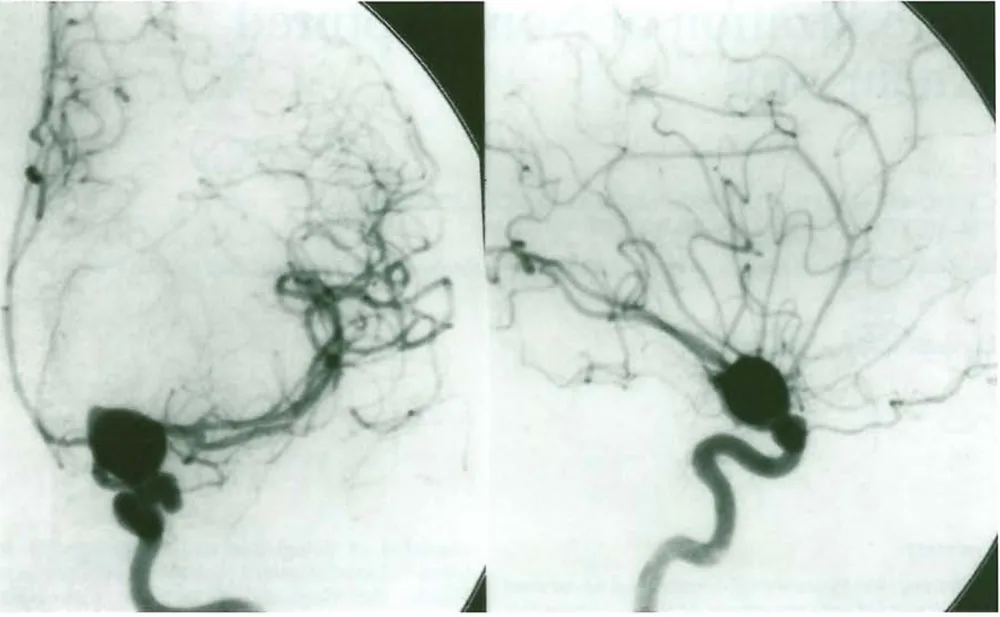
Coiling was harder for aneurysms with a wide neck relative to their size, clot in the wall, giant size, arteries arising from the sac, or a middle cerebral artery location. With experience, the team tended to avoid these, especially unruptured ones, since new data suggested unruptured aneurysms carry less risk than once thought. Newer tools, such as shaped coils, balloon assistance and stents, may lower the risk of treatment.
A plain-language summary for patients and families. It is not medical advice, and individual results vary.
Abstract
Options for treatment of intracranial aneurysms have expanded with the advent of the Guglielmi Detachable Coil (GDC) eight years ago. We have reviewed 435 cases of intracranial aneurysms treated at UCSF by endovascular means using the GDC system. Of these, 55% represent anterior circulation aneurysms, and 45% are located in the posterior circulation. Additionally, 55% of the aneurysms presented with subarachnoid hemorrhage (SAH) and 45% were unruptured. Factors which hindered optimal coiling include the following: wide aneurysm neck in relation to the overall aneurysm size, mural thrombus, giant aneurysm, arteries originating from the aneurysm sac, and middle cerebral location. After initial experience was gained, we tended to avoid these aneurysms especially in the non-ruptured group. This may be especially important in light of new epidemiological data suggesting that the natural history of unruptured aneurysms is significantly lower than previously thought. New technical developments which may reduce the risk of treating unruptured aneurysms include the two-dimensional coil, the three-dimensional coil, the balloon-assist technique for wide-necked aneurysms, and combined stent-coil procedures.
Abstract as indexed in PubMed (PMID 20670547). Copyright the publisher.
Cite this paper
Dowd CF, Phatouros CC, Malek AM, Lempert TE, Meyers PM, Halbach VV, Higashida RT. Embolization of non-ruptured aneurysms. Interv Neuroradiol 5 Suppl 1:93-6. 1999. doi:10.1177/15910199990050S117 PMID: 20670547.